Table of Contents
- Start With a Motorcycle Luggage Setup That Balances Weight
- Motorcycle Road Trip Essentials You Should Never Leave Behind
- Choosing the Best Motorcycle Rain Gear for Touring
- How to Pack Riding Apparel and Leather Gear for Changing Weather
- Space-Saving Techniques for Gear Organization
- What Not to Overpack for a Motorcycle Rally
- Frequently Asked Questions
Last Updated: September 28, 2026
Start With a Motorcycle Luggage Setup That Balances Weight
If you're heading to Myrtle Beach for Fall Bike Week, packing smart matters just as much as deciding what to bring. Warm afternoons, cooler mornings and changing coastal weather can make layers, rain gear and easy-to-access riding essentials especially useful.
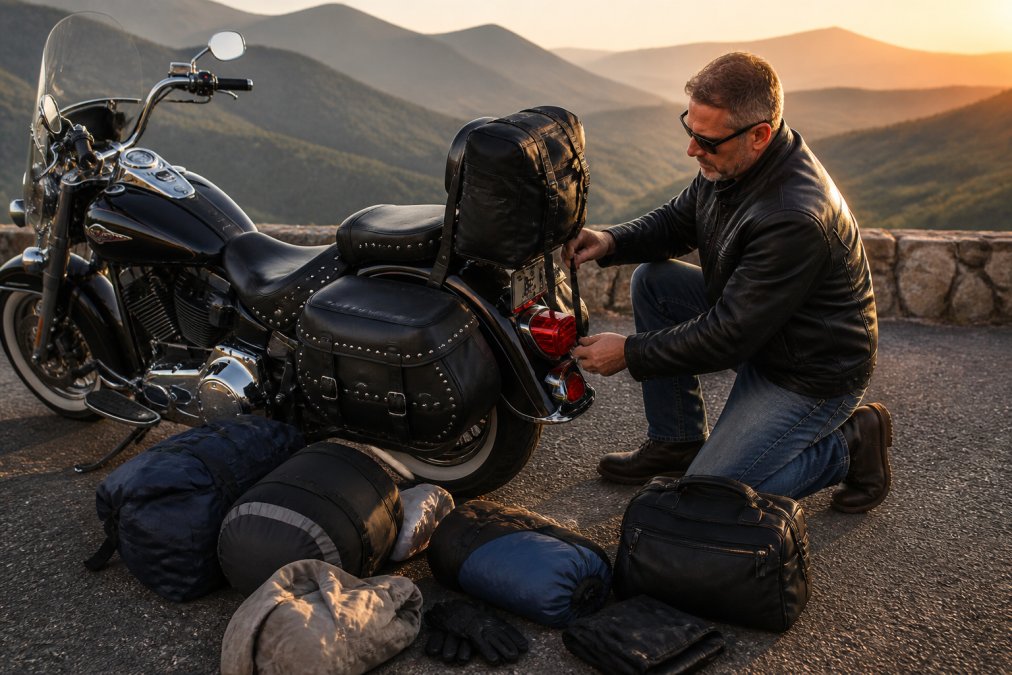
Learning how to pack for a motorcycle rally starts with one rule: keep the heavy stuff low and centered. A top-heavy load can affect how your bike handles, so thoughtful weight distribution matters. This guide from Jamin Leather® covers what to bring, what to leave at home, and how to organize and secure your gear for the ride. The same packing strategies can be used for Fall Bike Week, other motorcycle rallies and multi-day motorcycle trips throughout the year.
Why Center of Gravity Matters More Than Total Capacity
How you distribute luggage can affect how a motorcycle handles, particularly when weight is carried high or far from the bike's center.
- Heavy tools and liquids: lowest point, near the bike's center
- Medium gear: saddlebags, balanced left and right
- Light items: top bag or sissy bar pack
Bags, Straps, and Securing Your Load
Loose loads shift at highway speed, so secure everything with luggage straps or bungee cords rated for the job. A leather sissy bar bag with adjustable straps, like the Extra Large Leather Motorcycle Sissy Bar Bag Backpack Travel Pack, gives you a stable base plus a rain cover. Check straps at every fuel stop.

Motorcycle Road Trip Essentials You Should Never Leave Behind
The motorcycle road trip essentials fit in three groups: tools, documents, and power. Skip any one and a small problem becomes a long day on the shoulder. The goal isn't a rolling workshop, it's a small kit that covers the failures you can actually fix roadside and gets you to help when you can't.
Tools, Tire Pressure, and Roadside Repair Basics
Start with a pre-trip inspection at home, because the best repair kit is the breakdown you prevented. Check tire pressure cold, look at tread depth and sidewalls for cracking or embedded objects, test the battery and charging system, check brake pads and fluid, confirm lights and signals work, and inspect the drive chain or belt for tension and wear. Do this a few days before you leave, not the morning of, that gives you time to order a part or book service.
For the kit itself, think in layers:
- Tire repair: a plug kit for tubeless tires, a compact pressure gauge, and a small 12-volt inflator. If your bike runs tubes, a plug kit won't help, carry the tools and spare tube your manual specifies, or plan on roadside assistance.
- Fasteners and electrical: zip ties, a few feet of safety wire, electrical tape, spare fuses in the ratings your bike uses, and a small roll of duct tape.
- Hand tools: a compact multi-tool plus the specific hex, Torx, or socket sizes your bike actually uses. Check your owner's manual for the tool kit your model came with and build from there.
- Consumables: chain lube for chain-drive bikes, a shop rag or two, and nitrile gloves so you're not cleaning grease off your hands at a fuel stop.
- Lighting: a headlamp beats a flashlight when both hands are busy.
Documents, Charging, and Digital Backup
Keep paper copies of important travel information such as your registration, insurance information and emergency contact details in a protected pouch. It's also helpful to keep secure digital copies of important documents you may need while traveling.
- Keep your registration and insurance information somewhere secure and easy to access.
- Save your insurance company's roadside assistance number and other important travel contacts in your phone.
- Carry a portable power bank and charging cable so you can keep your phone powered during long riding days.
- Write your emergency contact information on a card and keep it in your wallet or riding gear.
- Before leaving, make sure important phone numbers, directions and reservation details are available even if you lose cell service.
Choosing the Best Motorcycle Rain Gear for Touring
The best motorcycle rain gear for touring packs small, seals at the wrists and neck, and fits over your riding apparel without flapping. Look for a two-piece suit with taped seams. Roll-top bags and compression sacks keep wet gear away from dry clothes.
How to Pack Riding Apparel and Leather Gear for Changing Weather
Rally weather swings from hot afternoons to cool mornings, so build layers instead of packing for one temperature. Genuine leather gear holds up ride after ride and breaks in over time.
Layering for Warm Rides and Cool Mornings
Start with a moisture-wicking base layer, add a mid layer, and finish with a leather jacket or vest. Leather blocks wind well, which matters on early starts. For hot afternoons, a vented leather vest keeps some airflow while still looking sharp off the bike.
Space-Saving Techniques for Gear Organization
Organization on a motorcycle isn't about fitting more, it's about knowing where everything is without unpacking. Two riders can carry identical gear and have completely different trips depending on how it's packed.
Roll, Compress, and Group by Function
Roll clothes instead of folding them. Rolling reduces creases and lets you compress each item tighter than a flat fold. Then pack into compression sacks or stuff sacks, which squeeze air out and keep clean clothes separate from damp gear.
- Morning kit: toothbrush, deodorant, sunscreen, any medications, one pouch you grab without opening luggage.
- Rain kit: rain suit, glove covers, and a dry rag in a top-side pocket or tank bag.
- Tool kit: the roadside tools above, in one roll or pouch.
- Charging kit: power bank, cables, adapter.
- Laundry kit: a few dryer sheets or a small mesh bag for dirty clothes, so clean and dirty never mix.
Pack Differently for Different Motorcycles
Packing strategy should change with the bike, and most guides ignore this entirely.
- Cruisers: saddlebags and a sissy bar bag carry most of the load. Keep weight low in the saddlebags and reserve the sissy bar pack for light, bulky items like rain gear and a jacket liner. Watch that saddlebag lids clear the exhaust when loaded.
- Adventure and dual-sport bikes: soft or hard panniers plus a top box or duffel. These bikes tolerate a taller load better, but keep heavy items in the panniers, not the top box, and check that panniers don't interfere with your legs when standing on the pegs.
- Sport tourers: tank bag plus tail bag plus saddlebags. The tank bag is your reachable layer, documents, phone, snacks, rain gloves. Keep the tail bag light because it sits high and far back.
- Bikes with no luggage: a tail bag strapped to the passenger seat or a waterproof duffel across the rear rack. Use cam straps, not bungees, and recheck tension at every stop.
The Packing Table
Gear Category |
Where to Pack It |
Why |
|---|---|---|
Tools and liquids |
Low, near bike center |
Keeps center of gravity low |
Rain gear |
Top-side pocket or tank bag |
Quick access in a downpour |
Clothes |
Compression sacks |
Saves space, stays dry |
Documents and power |
Crossbody or tank bag |
Always within reach |
Dirty laundry |
Mesh bag or stuff sack |
Keeps clean gear separate |
Securing the Load
Loose loads shift at highway speed, so secure everything with luggage straps or cam straps rated for the job. Bungee cords stretch and can unhook; cam straps hold tension. Run straps so they can't slip into the wheel, chain, or belt, and check them at every fuel stop, straps loosen as loads settle. A leather sissy bar bag with adjustable straps, like the Extra Large Leather Motorcycle Sissy Bar Bag Backpack Travel Pack, gives you a stable base plus a rain cover.
Post-Rally Maintenance
The day after you get home is the best time to inspect the bike, because problems are fresh and you still remember what felt off. Wash the bike to remove road grime and bug residue, then check the chain or belt for slack and lubrication, inspect tires for new cuts or embedded objects, look for loose fasteners and leaking fluids, and clean and condition your leather gear before it goes back in the closet.
What Not to Overpack for a Motorcycle Rally
Leave the "just in case" items at home. Extra shoes, bulky towels, and duplicate tools add weight that hurts handling. Pack for the trip you're taking, not every possible scenario. Two pairs of gloves and one spare layer cover most rallies.
Frequently Asked Questions
What should I pack for a multi-day motorcycle rally?
Pack layers for warm and cool riding, rain gear, comfortable broken-in footwear, gloves, a hydration pack, and a basic tool kit with tire pressure gauge and chain lube. Bring chargers, a power bank, and copies of your emergency contact info. Roll clothing into compression sacks to save space. Keep heavier items low and centered in your motorcycle luggage setup so handling stays predictable on long rides.
How do I secure luggage to my motorcycle for a long trip?
Use luggage straps or bungee cords rated for highway speeds, and check tension at every fuel stop. Place the heaviest bag closest to the seat and as low as possible to keep your center of gravity stable. Sissy bar bags with adjustable Velcro straps and tiedown straps, like those from Jamin Leather®, are designed to mount securely. Never let straps dangle near the wheel or exhaust.
What is the best motorcycle rain gear for touring?
Look for rain gear that packs small, fits over your riding jacket without flapping, and has sealed seams. A rain cover for your luggage matters just as much as what you wear. Test your rain gear before the rally so you know it fits over gloves and boots. Store it where you can reach it without unpacking everything, since weather on long rides changes fast.
How do you handle changing weather conditions while riding to a rally?
Layer your riding apparel so you can add or remove pieces without stopping long. Start with a moisture-wicking base layer, add an insulating mid layer, and keep rain gear accessible in an outside pocket or tank bag. Leather gear breaks wind well but needs rain protection. Check the forecast each morning, but pack for the worst conditions you might realistically hit on the route.
Packing well comes down to balance, layers, and a short list you trust. Jamin Leather® carries genuine leather jackets, vests, chaps, gloves, boots, and bags built for the road, with a range of sizes and styles for men and women. Stop by the Myrtle Beach store or shop online to gear up before your next rally. Get started with Jamin Leather® and ride out prepared.